CHAPTER 4
European Reception


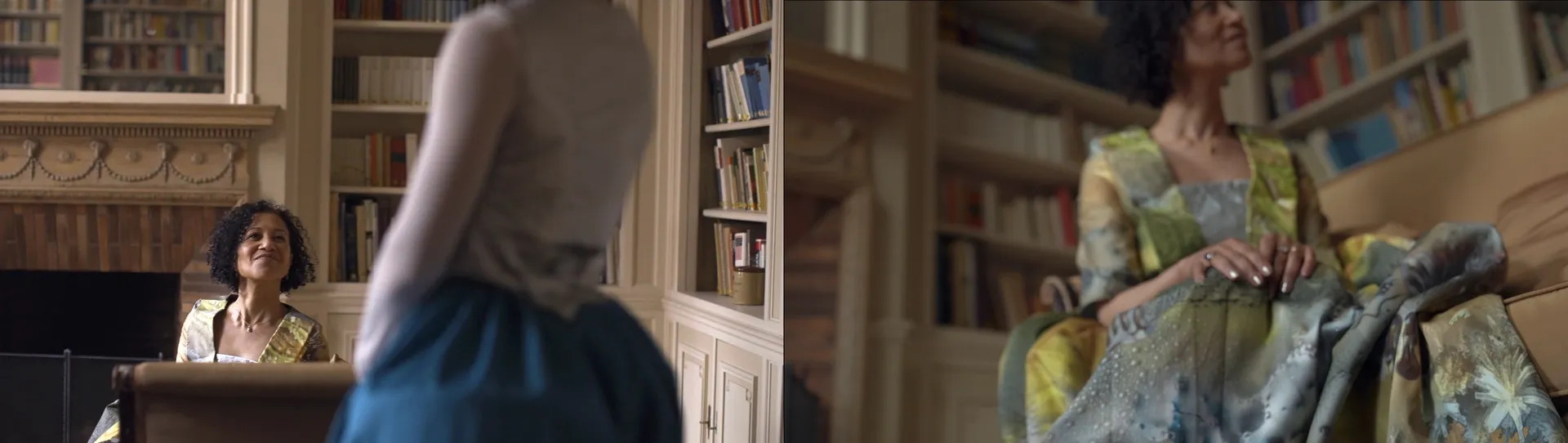
EMILIE : Listen… I dream of bringing together a circle of artists and writers. We could meet here, away from the gossip of Geneva. We could share our thoughts on our favorite books. There are so many exciting publications now. It’s as if the world is unfolding its power through words. We could…
MADAME DE MONTFORT : I don’t think your father will give permission to invite thinkers into his home who challenge everything.
EMILIE : We could always say it’s just about art.
MADAME DE MONTFORT : Let’s say you managed to convince him. How do you plan to go about it?
The key vector of reception for Lahontan’s work in Europe was the salon, often hosted by influential women, such as Madame de Lambert and Madame de Tencin. These spaces provided an important setting for intellectual exchange, where women could participate in and shape philosophical debate, even when they were excluded from formal institutions. Within this context, Lahontan’s text circulated as part of a shared intellectual repertoire—taken up in conversation, mobilized for critique, and used as a resource for social and rhetorical positioning within Enlightenment culture. [FN1]


The democratic principles of freedom, equality, and justice practiced by the Wendat profoundly influenced a young generation of Enlightenment philosophers, including Rousseau, Diderot, and Voltaire.
The liberal Republic of Geneva became a center for publishing, disseminating and discussing Enlightenment literature.
Everyone is talking about borders, territories, and geographic information systems. The world is expanding with new names, places, plants, and languages yet to be inventoried. Everything is getting reconfigured. And still, everyone believes they live in the centre of things.
In truth, every world is surrounded by another world. All people are imaginary to everyone else.


Madame de MONTFORT : Have you read The New Voyages of Mr. the Baron de Lahontan in America?
EMILIE : No. Everyone talks about it, but I haven’t read it yet.
Madame de MONTFORT : You have to read it, if only for its extraordinary descriptions of the Indigenous peoples. It’s a spark that brings new ideas to life.
EMILIE : What can the impressions of a Frenchman in the New World reveal to us?
Madame de MONTFORT : Lahontan is more than just a traveler. He met the Indigenous peoples of New France, notably the Hurons, and they opened his eyes to a world that challenges all our beliefs.
At its core, the debate sparked by Lahontan wasn’t about Indigenous peoples per se—it was about Europe itself: Is civilization progress—or corruption? Are hierarchy and property natural or artificial? Is Christian morality universal—or culturally contingent? Could gender relations be otherwise?
For many women readers, Lahontan’s work functioned as a kind of philosophical mirror—a way to question their own society from the outside. This was not a passive process of reception. Salonnières were not simply echoing Lahontan; they were curating and reframing his provocations within a highly coded social environment.
The effect was subtle but powerful. To question the institution of marriage directly—to suggest that it constrained women’s autonomy or operated as a form of economic coercion—would have risked social censure, or at the very least dismissal as impropriety.
But to report that, according to an Indigenous observer, European marriage appeared coercive, even absurd, was to introduce the same critique under the guise of observation rather than assertion. The argument arrived refracted, its edge softened just enough to become discussable.

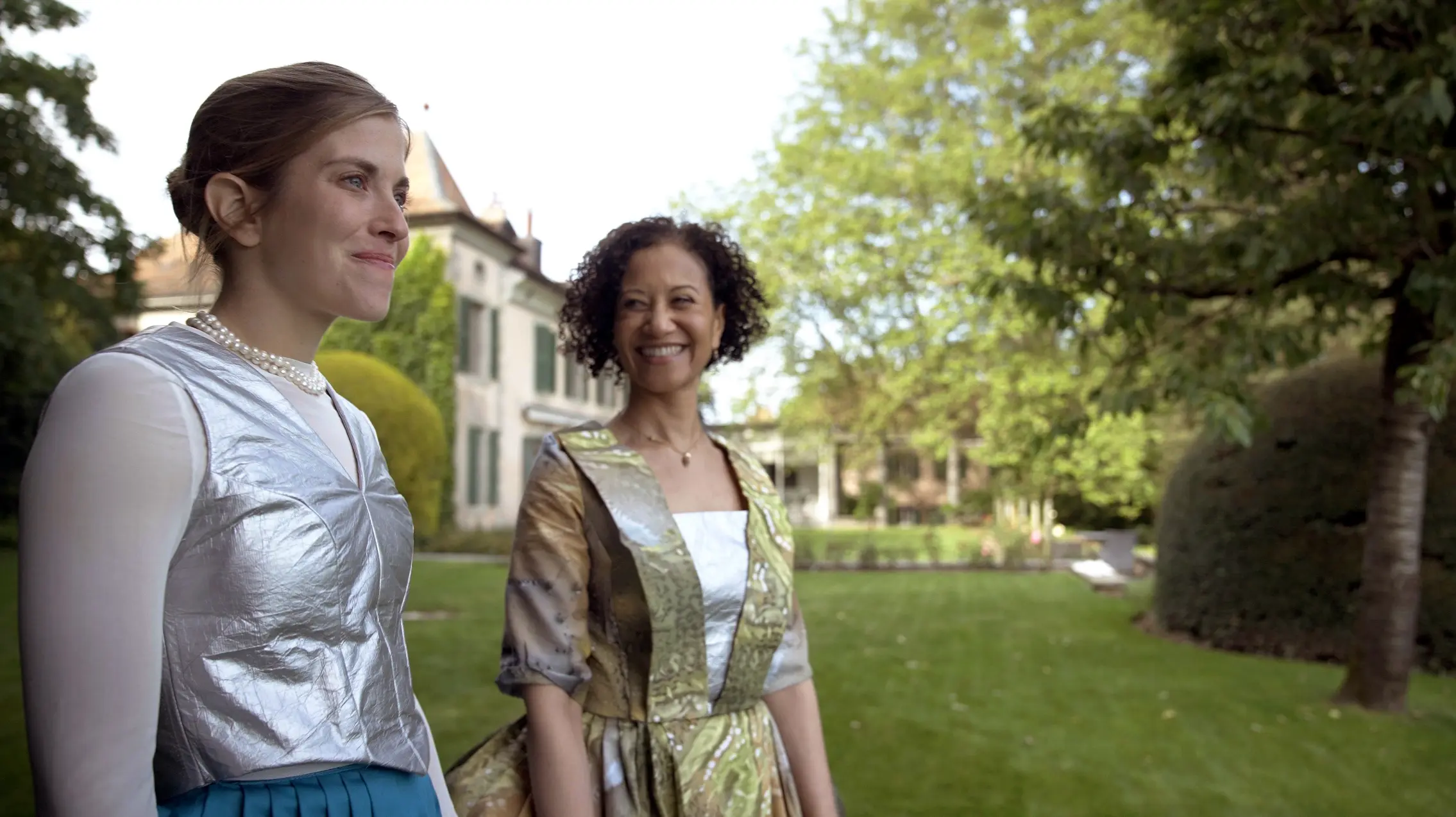
EMILIE : My brother was sent to Glasgow to study with the philosopher Adam Smith. His letters are full of new ideas. And me? I devour every book I can find, even Rousseau’s I keep it hidden from my father, of course. He finds his ideas on public education far too radical. To him, education belongs in the family, and in practice that means in the hands of the father.
MADAME DE MONTFORT : He is afraid that public education would set the minds of the younger generation ablaze. He wants nothing to change… to keep control.


MADAME DE MONTFORT : Rousseau comes very close to Indigenous thought. He says freedom is a right for everyone, whether ruler, child, or woman. He said that we are consumed by our ideas of progress that we have forgotten what true freedom looks like.
EMILIE : This book you’re telling me about will be the next on my reading list.

The Dialogues published by Lahontan foreshadow feminist arguments. You can see early echoes of concerns that later appear in the literature of Mary Wollstonecraft and Olympe de Gouges, especially around marriage as domination, education and autonomy, and the artificiality of gender roles.
Lahontan didn’t produce feminism—but he helped destabilize the “naturalness” of European gender norms. The crucial shift lay in recognizing that if Indigenous societies organize gender differently, then European patriarchy cannot be considered inevitable. This insight opens a conceptual space in which gender appears as a social construct—long before the term itself existed.
WOMEN IN SALONS
Women in salons didn’t simply “consume” Lahontan—they used him strategically. In the early eighteenth century, the salon was not simply a space of polite conversation—it was a carefully staged arena in which ideas could circulate under the cover of wit, indirection, and sociability. Within these rooms, often orchestrated by figures such as Madame de Lambert or Madame de Tencin, women occupied a paradoxical position: excluded from formal institutions of power, yet central to the informal economies of influence through which ideas were tested, refined, and disseminated.
It is in this context that the writings of the Baron de Lahontan acquired a particular utility. His Dialogues did not simply introduce an Indigenous critique of European society; they provided a voice that could be mobilized. “Adario,” whether read as ethnographic figure or literary construction, functioned less as an object of curiosity than as a rhetorical instrument—one that allowed salonnières and their interlocutors to displace sensitive questions onto a seemingly external perspective.
The effect was subtle but powerful. To question the institution of marriage directly—to suggest that it constrained women’s autonomy or operated as a form of economic coercion—would have risked social censure, or at the very least dismissal as impropriety. But to report that, according to an Indigenous observer, European marriage appeared coercive, even absurd, was to introduce the same critique under the guise of observation rather than assertion. The argument arrived refracted, its edge softened just enough to become discussable.
This displacement created a protected space for speculation. If, in Lahontan’s account, women in Indigenous societies could choose their partners more freely, dissolve unions without scandal, or participate in social life with fewer constraints, then these descriptions did not merely inform—they destabilized. They suggested, without stating outright, that the European arrangement of gender relations was neither natural nor inevitable, but contingent, perhaps even peculiar.
What emerges here is a form of intellectual maneuvering that might be
described as critique by proxy. The “elsewhere” of Indigenous life became a conceptual laboratory in which alternative social arrangements could be entertained. Within the conversational flow of the salon, one could ask: What if Adario is right? Or, more cautiously: Why does he see us this way? These questions did not require immediate endorsement; they required only the willingness to entertain the possibility that European norms might appear strange and unjust when viewed from the outside.
Such a strategy also redistributed the risks of speaking. The critical voice, after all, did not belong to the woman in the salon, but to the Indigenous interlocutor in the text. This allowed women to engage in forms of social and moral critique that would otherwise have been inaccessible to them. The authority of the critique was displaced outward, while its implications were quietly absorbed inward.
At the same time, this was not a passive process of reception. Salonnières were not simply echoing Lahontan; they were curating and reframing his provocations within a highly coded social environment. Through tone, irony, and selective emphasis, they could amplify certain aspects—sexual autonomy, the critique of jealousy, the arbitrariness of legal constraints—while muting others. In doing so, they transformed Lahontan’s text into a flexible instrument, one that could be adapted to the rhythms and constraints of salon discourse.
This “detour strategy,” as we might call it, reveals something fundamental about the conditions of thought in early modern Europe. When direct confrontation was foreclosed, critique did not disappear—it migrated. It took on oblique forms, spoke through borrowed voices, and unfolded in spaces where ambiguity could be maintained. The salon, in this sense, was not merely a site of reception, but a medium of transformation: a place where an imported critique of European society could be rearticulated as a reflection on gender, power, and the limits of the given.
And perhaps most importantly, this strategy did more than shield critique—it normalized it. By embedding these ideas within conversation, anecdote, and literary reference, salon culture allowed them to circulate without immediately demanding resolution. Over time, what began as a provocative observation attributed to an external voice could sediment into a more general intuition: that the structures governing women’s lives were not fixed truths, but open questions.
References
- [FN1] See Anthony Grafton, Worlds Made of Words: Scholarship and Community in the Modern West (Harvard: Harvard University Press, 2011).